The
Overt Narcissist
Grandiose, loud, and convinced the room already agrees with her.
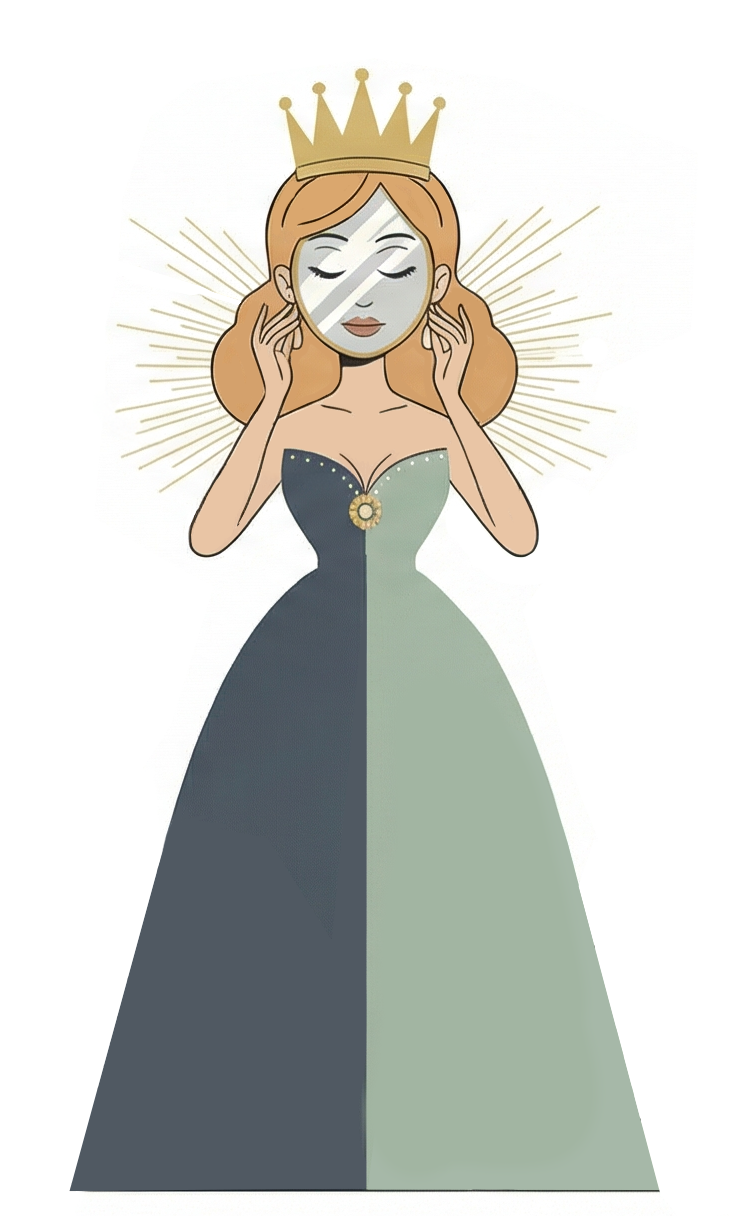
Grandiose, loud, and convinced the room already agrees with her.
Also called grandiose narcissism, the presentation most people picture when they hear the word "narcissist"
Overt narcissism is outward-facing. It correlates strongly with extraversion: high visible self-esteem, comfort with attention, and a genuine expectation of admiration rather than a hidden need for it. She doesn't wonder whether the room is impressed with her. She assumes it. Compliments are simply accurate information, and disagreement is either a misunderstanding or an attack.
This type doesn't hide contempt well, and often doesn't try to. Criticism, boredom, and irritation show on her face in real time. Researchers studying grandiose narcissism have found it's associated with more proactive, high-risk aggression, direct confrontation, public put-downs, open competition. It's usually aimed at people she perceives as higher-status rivals rather than safe, low-risk targets.
She needs an audience more than she needs a specific person. Family events become opportunities to be photographed, thanked, or centered. She competes openly, sometimes with her own children, over looks, achievement, and attention, and when she loses that competition, even briefly, the reaction is immediate and disproportionate.
Because the behavior is so visible, this is usually the type people mean when they picture "narcissist": self-important, entitled, quick to anger, prone to bragging. It's also the type most likely to trigger a formal DARVO response the moment she's confronted, since the audience she performs for is also the audience she needs on her side.
She expects the best table, the front row, the first turn, and treats not getting it as a genuine injustice, not a minor inconvenience.
She measures herself against everyone in the room, including her own children, and treats their wins as her losses.
Someone else's engagement, promotion, or diagnosis somehow becomes a story about her. Her feelings, her opinion, her related experience.
She doesn't wait for privacy to explode. A worker enforcing a store policy, a family member offering mild criticism. The reaction is loud, immediate, and unconcerned with who's watching.
Loud isn't the same as leavable. Because the behavior is so out in the open, outsiders often assume family members should simply stand up to her, or wonder why no one has. In practice, visibility cuts both ways: the family has usually had years to normalize the intensity as "just how she is," and confronting someone that reactive, in front of people who've learned to keep the peace at any cost, tends to redirect the fallout onto whoever raised it, not onto her. Documentation is easier with this type. Consequence-free confrontation rarely is.
Further viewing on the overt (grandiose) narcissist