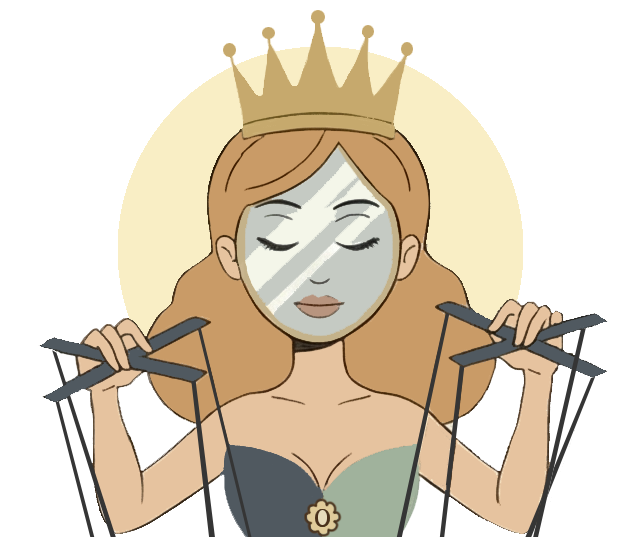
WARNING: Do not let a narcissist know you suspect them of being a narcissist. The fact that you know and they don't keeps you safe.
Narcissistic mothers don't all look the same. Most family members can spot the overt type immediately, the other four are far easier to miss, and far harder to prove. Each type has its own dedicated page below.
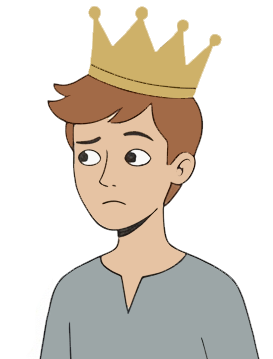
Loud, boastful, and entitled to center stage. She needs to be seen as the best mother, the most selfless, the most stylish, the most accomplished, and she will say so, often. She competes openly with her own daughters over looks, attention, and achievement. When contradicted, she doesn't sulk; she explodes into narcissistic rage. Everyone in the family already knows something is wrong with her, the difficulty is that no one is allowed to say it out loud.
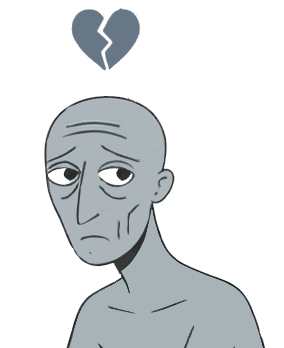
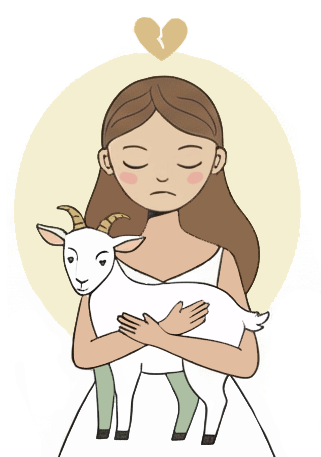
Quiet, fragile, and permanently wounded. She frames a lifetime of manipulation as sacrifice: "I gave up everything for this family and no one appreciates me." She uses health problems, real or exaggerated, as leverage and sympathy currency. Her aggression is passive, the sigh, the silent treatment, the martyred tone, which makes her much harder for outsiders to identify, because she never looks like the aggressor.
Narcissism fused with real antisocial traits, paranoia, and sadism, a specific syndrome described by psychoanalyst Otto Kernberg. She doesn't just fail to feel bad about hurting people; she takes genuine satisfaction in it, and she assumes everyone around her is plotting the same cruelty she's capable of, which she uses to justify striking first. This is the most volatile and dangerous type on this site.
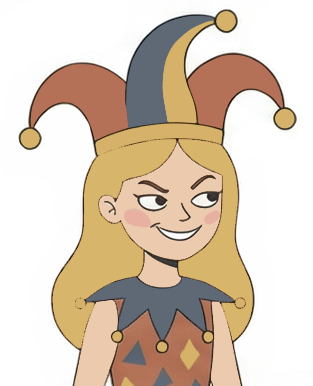
Calculating rather than reactive. Where the overt and covert types are driven by fragile self-esteem, this type is patient, cynical, and transactional. It's narcissism layered with genuine Machiavellian traits. Her rage, when it appears, is a tool she deploys deliberately, not a loss of control. She is patient enough to play a long game: isolating a spouse from his children, restructuring a will, or destroying a sibling's reputation over years rather than in a single outburst. Unlike the malignant type, causing pain isn't the point for her, it's just sometimes the cost of getting what she wants.
Narcissism layered over genuine antisocial personality traits: impulsivity, deceit for profit or simple pleasure, disregard for rules and consequences, and a real, not performed, lack of remorse. Where the Machiavellian type is patient and controlled, this type is reckless; she doesn't plan the damage so much as cause it on impulse and let other people clean it up.
The type shapes the danger. An overt narcissist mother is exhausting and demeaning to live with, but her behavior is visible, which makes documentation and boundary-setting easier. The covert type is harder to name because she performs victimhood so well. The malignant, Machiavellian, and sociopathic types are the ones most likely to cause irreversible harm, lost inheritances, severed families, ruined finances, for three very different reasons: sadism, strategy, and recklessness.
Across all three types, these traits tend to hold true
Every narcissist builds an identity around one central, false image
Narcissists build themselves around a core self-image: that they are nice, intelligent, capable, holy, or the best mother who ever lived. That core is where their armor is thinnest. The mildest insult aimed at that specific trait will produce a wildly disproportionate reaction, because it threatens the entire structure her identity is built on.
Say "you're mean" to a mother whose core is being nice, and watch for a reaction that is comically out of proportion to the comment. Suggest a scientist is smarter than she is, if her core is intelligence. The response tells you what she's protecting, and it tells you where the real vulnerability is, information that matters far more to your own boundary-setting than to winning any argument.
This isn't a party trick. Deliberately triggering narcissistic rage can escalate into retaliation, including being cut off, smeared, or targeted with a coordinated response from flying monkeys. Understanding the core is for recognition, not confrontation, see Defense & Recovery for safer approaches.
Narcissistic personality disorder is generally diagnosed more often in men than women, but researchers increasingly believe this gap is partly a measurement problem, not just a real difference. The DSM-5 framework leans heavily on grandiose traits, entitlement, exploitation, overt dominance, that read as more culturally masculine, while women with narcissistic traits more often present as vulnerable or covert, and clinicians are more likely to mislabel that presentation as borderline personality disorder instead.
Female narcissists also tend to score lower on raw entitlement, impulsiveness, and open aggression than male narcissists, and lean harder into self-absorption, jealousy, and passive-aggressive bullying that can be dressed up as concern, humor, or victimhood. That combination, real harm, socially acceptable packaging, is exactly what lets a narcissistic mother operate for decades without anyone outside the family naming what's happening.
Watch how she handles her last real conflict. Was she genuinely concerned about the other person's feelings, or did she recast herself as the one under attack? Narcissists respond to conflict by making themselves the victim, through rage or through tears, which can be mistaken for empathy when it is closer to the opposite.
A useful pattern: if a mother coldly cuts a child or family member out of the family with no real attempt at reconciliation, and other relatives feel pressure to agree with the exclusion, that is a strong signal. Most mothers go to significant lengths to stay connected to their children, even when the child has genuinely done something wrong. The people who get permanently and coldly excluded from a narcissistic family are far more often the ones who saw through the pattern than the ones who caused it.