A boundary violation with no physical component, and a term with a specific clinical origin
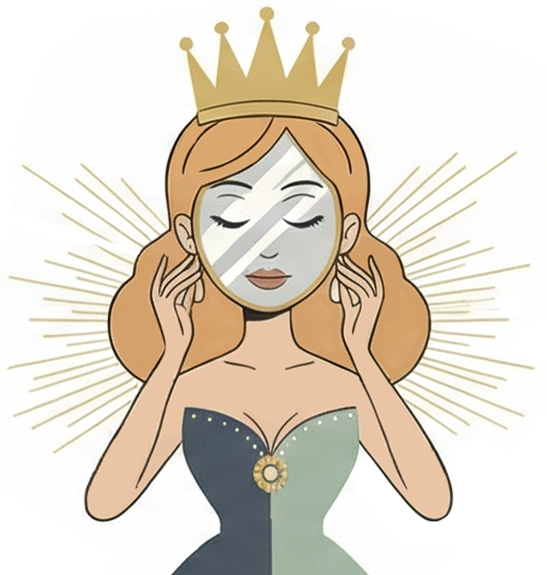
Female narcissists equate love with control, and they often do not care for sex, using it as a tool for manipulation. To them, a son makes a perfect partner: someone they can totally control and don't have to be intimate with. More than that, their son is closest they'll ever get to having a relationship with themselves. But narcissist mothers can be covertly incestuous with any of their children, because they have no concept of boundaries. To them, their children are extensions of themselves, not real people with their own goals.
Emotional incest, also called covert incest, was named by psychologist Dr. Kenneth Adams in his 1991 book Silently Seduced: When Parents Make Their Children Partners. It involves no physical or sexual contact whatsoever. Instead, a parent turns to a child for the companionship, validation, and emotional intimacy that should come from an adult partner, making the child, in every way except physically, a stand-in spouse.
Dr. Adams draws the line precisely: the relationship crosses from ordinary closeness into emotional incest the moment the child exists to meet the parent's needs, rather than the other way around. A mother who is lonely or unfulfilled in her marriage, or in the case of the narcissist "imagines" that she has been betrayed by her husband (because he couldn't meet the impossible demand to be perfect) redirects that hunger for intimacy onto her child instead, and the child, who has no framework to recognize this as inappropriate, simply absorbs the role.
You'll see this described under a few overlapping terms: spousification, enmeshment, and emotional parentification, a specific form of parentification where, instead of taking on a parent's responsibilities, the child takes on a spouse's emotional role. All of them point at the same underlying injury: a child's development co-opted to serve an adult's unmet needs.
In practice, it looks like a mother confiding details about her marriage, her finances, or her own parents that no child should carry; expecting her child's constant emotional availability; growing jealous or punishing when the child's attention goes elsewhere, a friend, a partner, a life of their own. The child becomes a confidant, a protector, and an emotional caretaker years before they're equipped for any of it.
Anyone trying to change this behavior is accused of tearing apart the family, separating a mother from her children, or jealous of the close bond the family shares.
The type of narcissist running the enmeshment tends to determine which insecure attachment style the child develops
Anxious (preoccupied) attachment is an insecure attachment style marked by a strong desire for closeness, a persistent fear of abandonment or rejection, and a deep need for reassurance, a negative view of one's own worth paired with an almost desperate positive view of others. It develops from inconsistent or unpredictable caregiving: a caregiver who is warm and attentive sometimes, and unavailable or punishing at others.
The covert narcissist mother is a near-perfect engine for this. Her warmth is unpredictable by nature. Martyred and withdrawn one day, sweetly needy and demanding closeness the next, always centered on her own emotional state. The child never learns a stable rule for earning her love, only that they must stay hypervigilant to her moods to have any chance of it. That chronic uncertainty is what anxious attachment is built from.
Avoidant (dismissive) attachment is an insecure attachment style marked by discomfort with closeness and vulnerability, high self-reliance, and a tendency to suppress the need for other people entirely. It typically develops out of childhood emotional neglect, rejection, or shaming by a primary caregiver, not smothering, but coldness.
The malignant, Machiavellian, and sociopathic mothers tend to produce this instead, each by a slightly different route, sadistic rejection, transactional indifference, or genuine disregard, but with the same result. None of them are chasing sympathy the way the covert type is; they're managing, using, or simply not registering the child's needs at all. A child's expressed needs are met with indifference, rejection, or outright shaming rather than smothering attention, and the child learns early that needing anything from her is unsafe or simply pointless. Where the covert mother's child learns "I have to work harder to be loved," this child learns "I should expect nothing, so I'll need nothing."
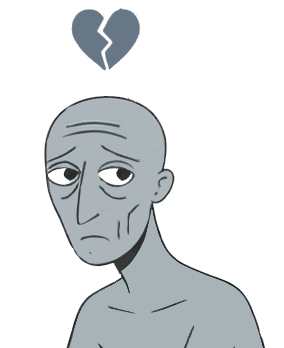
The self-reliance an avoidantly attached adult projects looks, from the outside, like a healthy lack of neediness. Underneath, it functions as a defense built in childhood, and it tends to hold up only as long as a relationship stays shallow. Research on avoidant attachment consistently finds it associated with lower relationship satisfaction, for both the avoidant partner and the person they're with, along with a strong tendency to withdraw rather than engage during conflict, and a habit of reading normal closeness or conflict as an unwelcome demand.
As relationships deepen and genuinely require vulnerability, avoidant adults are more likely to be the one who initiates the breakup, or to quietly disengage and redirect attention elsewhere rather than repair the relationship. It isn't that closeness stops being wanted; it's that closeness starts to feel like danger, in a way that's very hard to override without recognizing where the pattern came from. Notably, research also finds that avoidant adults tend to fare worse, not better, emotionally after a real relationship ends. The defenses that protect them in day-to-day closeness don't hold up against a major loss.
Most often the firstborn son
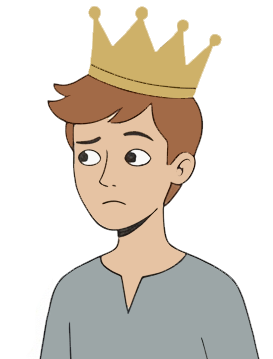
The golden child role and the emotionally incestuous "surrogate spouse" role usually land on the same child, and that child is most often the eldest biological son. Birth order matters here in a very practical way: he has simply had the most years for enmeshment to take hold, often from infancy, before any sibling existed to divide her attention. Being her son rather than her daughter matters too. A narcissistic mother frequently treats daughters as competition for beauty, youth, and attention, while a son can be idealized without that same rivalry.
She confides in him the way she would a partner: her marriage, her finances, her resentments toward her own parents or her other children. He becomes responsible for her moods, her happiness, and her reputation, in exchange for being the favored child, more attention, more resources, and a bond she treats as untouchably central. As he grows older, this often persists in unmistakably spousal shapes: an obsessive need to know where he is and who he's with, open jealousy toward his girlfriends or wife, and attempts to insert herself into his marriage or turn his own children against their mother. He is not being loved as a son. He is being kept as a partner.
If the golden child holds the emotional-spouse role, it leaves an obvious question: what is the actual husband for? In this family structure, the enabler's function isn't emotional intimacy. That position is already filled. His role is closer to security: he defends her from outside criticism, absorbs conflict so she doesn't have to, funds and manages the household, and runs interference with anyone who threatens her control, including his own children. He resource guards on her behalf. He is, functionally, her bodyguard rather than her husband.
This division explains a pattern that otherwise looks confusing from outside the family: an enabler who is devoted, even fiercely protective, while still seeming emotionally shut out of the marriage himself. He isn't imagining it. Her real intimacy has already been assigned elsewhere. His job was never to be close to her; it was to keep everyone else at a safe distance so that closeness with the golden child could continue undisturbed.
If this is your family: recognizing which role you were assigned, surrogate spouse, bodyguard, or something else, doesn't require confronting anyone to be useful. It's the first step toward separating your own identity and your own relationships from a role you never agreed to. See Defense & Recovery for how to begin that separation.
Further viewing on enmeshment