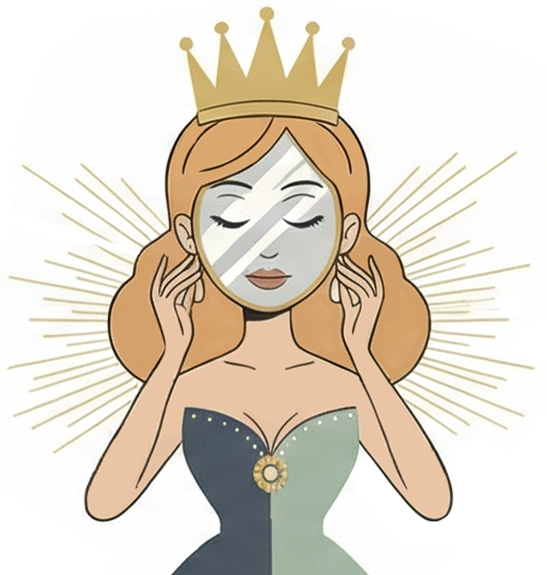
Reworked from Verywell Mind's list of warning signs; if several of these feel familiar, that recognition is worth taking seriously
She'll dictate who you're allowed to be friends with, what you're allowed to buy, even with money you earned yourself, down to small things like what you can and can't eat. That same control extends to her children: their love lives, friendships, and careers are all subject to her approval, and she'll insert herself into any of them whenever she pleases.
Everything can seem fine until something minor sets her off, and you never know what might trigger her. Walking on eggshells refers to the careful and cautious behavior often adopted when dealing with a narcissist. This phrase highlights the emotional strain and anxiety experienced by those who feel they must tread lightly to avoid conflict or criticism.
Nothing is said outright, but you sense that refusing what she wants will cost you, so it's easier to just go along with it. Over time this becomes so routine that you lose track of what your own preferences even used to feel like.
She flatly denies things you clearly remember, or rewrites what happened so you're the one at fault. Say it happens in front of others enough times, and they start believing her calm version over your frustrated one. Watch out if she starts saying you might have dementia or you have a poor memory, she might be setting you up for something worse. See Gaslighting for the tactic in full.
Your appearance, your clothes, your choices, nothing is off-limits. They're delivered as jokes, asides, or direct put-downs, sometimes in front of other people. She's just as quick to tear down anyone else she sees as beneath her. Belittling comments might include others' physical appearance, things they buy, what they wear or their personalities.
Nearly every conversation turns into conflict no matter how carefully you approach it, until staying quiet starts to feel safer than saying anything. Provoking a reaction seems to satisfy something in her. She loves to control everything, including how you feel.
She engages when it's convenient for her, but has never really asked what you want out of life or how you might build toward it together. Conversations circle back to her accomplishments, and you find yourself wondering if she's capable of real emotional connection at all.
Despite what you've built and accomplished, you feel chronically inadequate. Hobbies and friendships you used to have have quietly disappeared, replaced by exhaustion and, sometimes, lies you tell others to cover for what's actually happening at home.
An apology never really arrives. Narcissists don't see the people around them as equals, so accountability isn't on the table. Whatever goes wrong becomes your fault by default, even when it demonstrably wasn't.
Look for a difference between her public persona and her private one. In front of other people she's charming, composed, impressive. Alone with you, the mask drops, and you're dealing with someone almost unrecognizable from the person everyone else thinks they know.
Early on, you felt like the most important person in the world to her. Once the relationship was secured, that intensity didn't fade the way normal infatuation does. It was withdrawn, replaced by distance, criticism, or indifference. See Love Bombing for why that shift is the point, not an accident.
Affection disappears the moment she's displeased, and doesn't return until she decides it will benefit her to be warm again. It can look like an unusually harsh habit you've just learned to live with. It isn't. No healthy relationship runs on affection used as punishment.
You may be carrying the household financially while she can't hold a job, or she earns well and you never see any benefit from it. Either way, the pattern tends to be the same: the money serves her, not the relationship, with no real plan for that to change. Every aspect of your life is always in her favor. She doesn't care to spend money on things that only benefit you. A loving wife would want you to have the things you want as long as you can afford them.
Bring up something that's actually hurt you, and somehow it becomes your fault by the end of the conversation. She's cut off one of your own children, maybe run them out of the family entirely, and yet she's the one in tears. You bring up something you want, or a time you've been hurt, and you feel dizzy by the end because she's brought up something from the past you've done wrong. Either way, no matter who did what to whom, you're the one who ends up consoling her. You may mistake this for empathy, but it's the opposite.
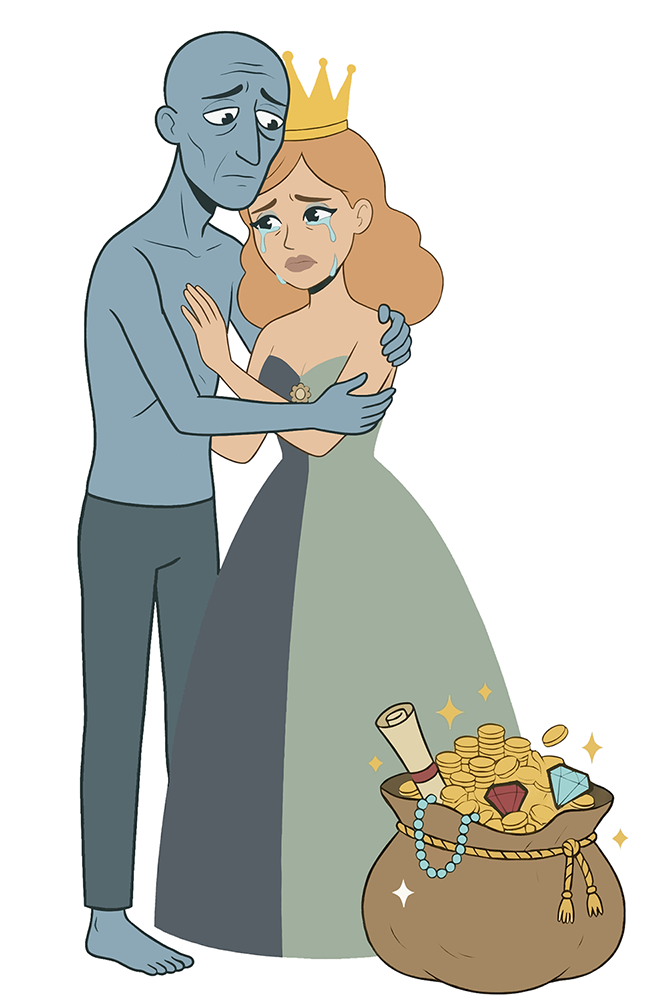
The enabler doesn't start out this way. He's trained into it, one small capitulation at a time
The first time he sees his wife turn on one specific child, his instinct is usually the normal parental one: to comfort or defend that child. But defending the scapegoat doesn't get treated as ordinary parenting. It gets treated as choosing the child over her, undermining her authority, or being manipulated by a kid who's "playing him." The response from her is often disproportionate: cold silence, accusations, days of tension he has to work to repair. He learns, gradually, that comfort costs more than compliance.
Eventually, the training completes itself. Instead of waiting to be told to discipline the scapegoat, he starts doing it preemptively. He corrects the child before she has to, keeping his distance so he can't be accused of taking sides, sometimes punishing more harshly than she would have herself, just to make his loyalty visible. From her side, this is delegated enforcement working exactly as intended: she gets the control without the confrontation. It feels, to him, like the only way to keep the house calm.
This is also how the scapegoat experiences it. From the child's side, none of this looks like a father who was slowly conditioned into it. It looks like a parent who used to protect them and, at some point, stopped, or started joining in instead. See The Scapegoat for what that does to the child on the other end of it.
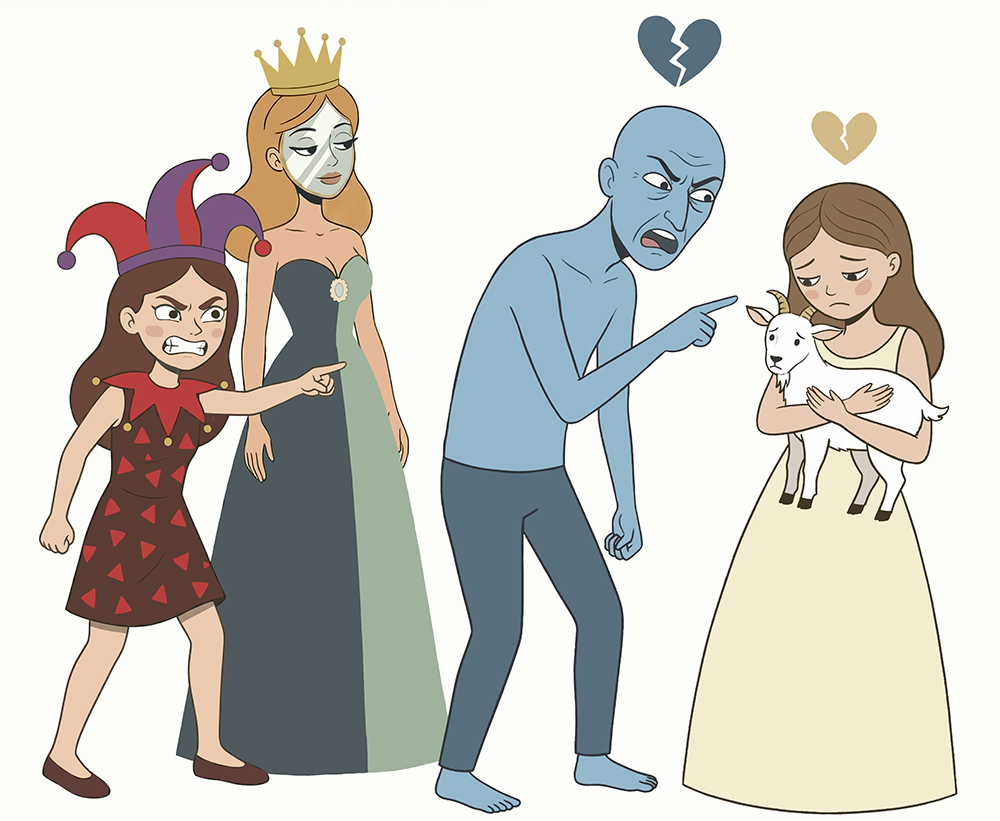
The Enabler is usually the narcissistic mother's spouse, often a man who was raised by a narcissistic parent himself and learned early that the way to survive is to side with whoever holds the power, and to direct any friction toward whichever family member is safest to blame. He isn't necessarily cruel by nature; he's been trained, over years, to treat the narcissist's comfort as the family's top priority and to look away from anything that would require him to challenge her.
He tends to have an avoidant response to conflict: if he just doesn't look at her behavior directly, he can convince himself it isn't that bad. This is exactly backwards. Of everyone in the family, the spouse of a narcissist is often in the most danger, because narcissists are unusually vengeful, and a spouse who has ever meaningfully slighted or challenged her will be the target of a long, patient campaign, one that can end with his finances, relationships with his own children, health decisions, and reputation dismantled.
Why would she stay with someone she may secretly resent? Two reasons repeat across these family systems. First, narcissists are unusually invested in legacy, not building one, but damaging someone else's, sometimes over decades, even inside a marriage. Second, and more practically, the enabler helps her resource guard: he defends her from anyone who threatens her control, whether that's a child who sees through her, an in-law who asks questions, or a friend who tries to intervene on someone's behalf. In many of these families, her real emotional intimacy has already gone to the golden child, see Emotional Incest, which leaves the enabler functioning less like a husband and more like a bodyguard.
A useful gut-check for whether you're in this role: your wife wants you at a work event with an important client, and on the same day your least-favorite child has a final game they've begged you to attend. If you flinch at "least favorite" applied to your own child, you may already know the answer. If you don't hesitate to choose the event over the child, and you did it out of fear of what happens if you don't; that fear is the tell.
Why so many people who grew up with a narcissist end up marrying one
Narcissism doesn't register as a red flag to someone who grew up with a narcissist or sociopath; it registers as normal. The chaos, the conditional love, the walking on eggshells, the charm that flips into cruelty behind closed doors: these aren't warning signs to a nervous system that learned them as the baseline for what a relationship is. So when you met her, charming, magnetic, maybe even a little controlling in ways that felt like attention, it didn't feel alarming. It felt familiar, and familiar is easy to mistake for safe.
This is how so many enablers end up here: not because they're naive, or because they "keep choosing badly," but because the specific signals that should have triggered alarm were normalized years before they ever had the vocabulary to name them. Her jealousy read as devotion. Her control read as how someone who loves you acts. The red flags were never invisible. They were already part of the furniture long before she arrived.
Naming it is what breaks the pattern. Once you can name what you grew up with, see Narcissist Tactics, the same behavior in your own marriage stops reading as familiar and starts reading as what it actually is. That shift is often the first real step out.
A late-life scenario that plays out often enough to have a name
One recognizable pattern: an older man with real wealth marries a narcissist who becomes stepmother to his children. Named for the cuckoo bird, which lays its egg in another bird's nest so the host raises a chick that isn't its own, the pattern follows a similar logic. She uses the marriage to access resources built by someone else, then works, often patiently and over years, to redirect them toward herself and away from his biological children.
The mechanism is usually financial and relational isolation working together: convincing him his memory is worse than it is, discouraging visits from friends and his own children, managing what his doctors hear, and gradually moving toward control of his finances and legal decisions, up to and including power of attorney. None of it looks dramatic in any single moment. It looks like "I'm just taking care of him."
This is a documented category of elder financial abuse, not just a family-systems theory. Real warning signs include sudden changes to a will, trust, beneficiary designation, or power of attorney with no major life event to explain them; a spouse who increasingly manages a partner's medical appointments alone or out of earshot; growing isolation from adult children and old friends; and a sudden reversal of someone's lifelong financial habits. If you recognize this pattern in your own family, an elder law attorney, not just a family conversation, is the appropriate next step.
Two questions for sorting out who the narcissist actually is in a family conflict
Imagine you found out, with certainty, that one specific person in the conflict was the narcissist. Would you feel relief if it turned out to be one of them rather than the other? If you'd feel a rush of relief learning your child is the narcissist rather than your wife, or your sibling rather than your mother, pay attention to that relief. It usually points at the person you've been conditioned to protect out of fear, not the person who's actually safe.
Think of it like two people standing near a pile of gold. Who's staying to defend it, and who is trying to walk away? Victims tend to run from the fight, toward freedom. Narcissists tend to stay and fight for control of money, of the family's opinion, of a person. Notice who has taken charge of the finances, who "protects" your time from a specific family member, or who has asked you to go silent toward your own spouse or child. That's rarely a coincidence.
The reasons you stay were built into you on purpose
The reasons that keep you in this marriage are the same reasons she's spent years building into you. She's convinced you that you're worthless, that no one else will ever love you, that you're too old, too damaged, or too unlovable to start over, and that you'd be lost without her. None of that is true. The version of your life on the other side of leaving is one where you're free to be loved for real, to spend the money you earn the way you choose, to keep the friends she's spent years pushing out of your life, and to live according to your own decisions instead of hers.
You may tell yourself that staying out of her way is the safer option, that if you just keep quiet and avoid conflict, you can escape her anger. The opposite is true. A narcissist doesn't forgive a slight; she files it away. The longer you stay, the larger that file grows, and eventually she becomes obsessed with getting revenge, on you, on the people you love, and on everything you've built, all while telling you, convincingly, that she loves and adores you. By the time you're too old, sick, or infirm to defend yourself, she will have exactly the kind of total control described in the Cuckoo Pattern above.
Leaving doesn't just protect you. Once you remove yourself, she will move on to someone else to obsessively fixate on; that's how this works, and it isn't something you prevent by staying. What staying actually does is give her continued access to control and manipulate the people you love most. Every year you remain is another year she keeps that access. Leaving isn't abandoning them. It's the only way to stop enabling it.
Maybe you've read this website and fear you're a narcissist too. Enablers and other children of narcissists can sometimes exhibit narcissistic behaviors because they're mimicing the narcissist.
...the fact that you're reading this, understanding a change needs to be made, shows empathy and understanding, and that's not narcissism.
The scapegoat isn't the only victim. She might gaslight you into believing it's not true, but you are a victim too.
Further viewing on the enabler dynamic
If you feel like you're the one causing the problems in this video, remember DARVO. The narcissist has been manipulating you into believing you're the one doing the things she's actually doing.